

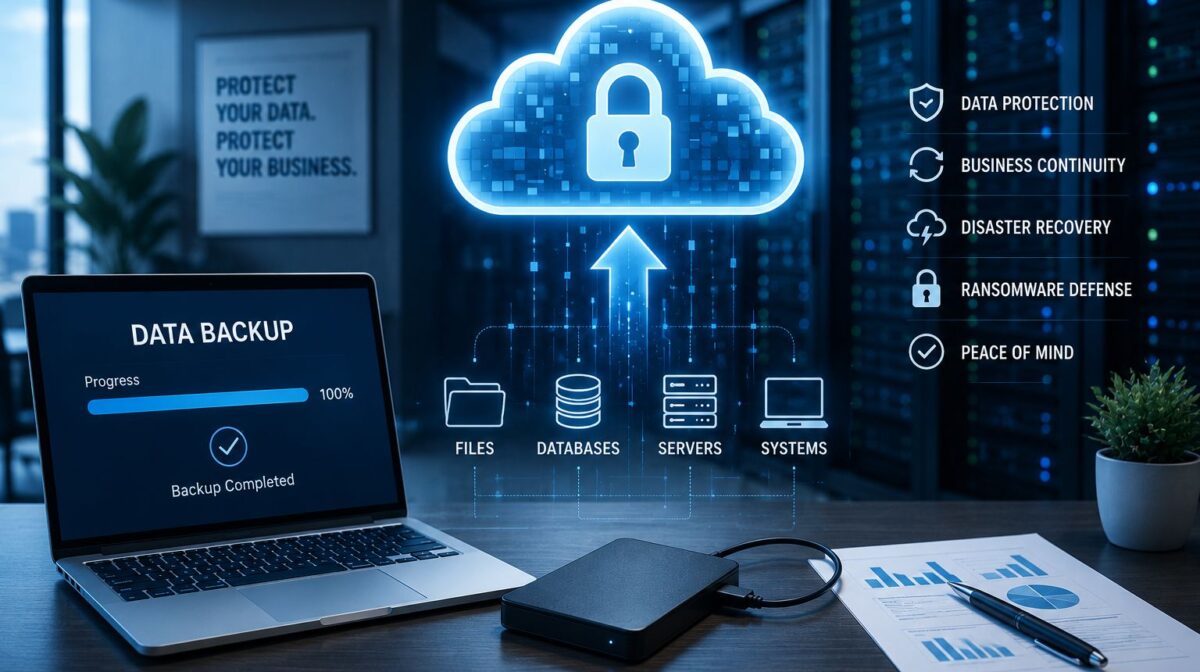
Data is now one of every organization’s most precious assets in the digital age. Organizations rely significantly on digital data to function effectively, from financial records and customer information to emails, databases, and business documents. Financial losses, business interruptions, and reputational harm can result from losing this vital information.
Because of this, data backup is now a crucial component of every company’s IT strategy.
Data Backup: What Is It?
Making copies of crucial company data and safely keeping them in different places is known as data backup. If the original data is lost, corrupted, compromised, or damaged, these copies can be restored.
Many backup techniques are employed by modern enterprises, such as:
- Backups locally
- Devices for external storage
- Backups in the cloud
- Hybrid backup options
- Backup solutions that operate automatically
Businesses can swiftly recover from unforeseen events when they have a solid backup plan.
Typical Reasons for Data Loss
Data loss can occur for a variety of reasons and at any time. Among the most typical reasons are:
Hardware Errors
Unexpected failures can occur with servers, hard drives, and storage devices. Important data could be lost forever without the right backups.
Human Error
Significant losses may result from inadvertent file deletion, improper system setups, or rewritten data.
Attacks against Cybersecurity
Hacking attempts, virus, and ransomware attacks are all on the rise worldwide. Cybercriminals frequently target company data and seek reimbursement.
Natural Catastrophes
Natural calamities like floods, fires, lightning strikes, and others can destroy data entirely and harm physical infrastructure.
Software Errors
Critical data may become unavailable due to database corruption, operating system crashes, and application issues.
Regular Data Backups’ Advantages
Continuity of Business
Backup systems enable businesses to carry on with their activities even in the wake of unforeseen events. Companies can reduce downtime and swiftly restore data.
Protection of Data
Regular backups protect vital information from loss, corruption, and cyberattacks.
Quicker Recuperation
Businesses can swiftly restore files and systems, minimizing interruptions to regular business activities.
Client Confidence
Safeguarding client data increases confidence and shows a dedication to dependability and security.
Adherence to Regulations
In order to comply with requirements, several sectors mandate that firms maintain appropriate backup and data preservation strategies.
Solutions for Cloud Backup
Data backup is becoming more accessible and safe thanks to cloud technology. Cloud backup options have a number of benefits.
Backups that happen automatically
Accessibility from a distance
Expandable storage
Lower hardware expenses
Increased safety
Cloud-based solutions lower the risk of theft or physical damage by enabling businesses to keep copies of their data in safe offsite locations.
Creating a Backup Plan
Every company should have a well-defined backup plan that consists of:
- Finding important information
- Setting up routine backups
- Using several backup sites
- Testing methods for recovery
- Keeping an eye on backup performance
The often-advised 3-2-1 backup plan recommends:
- Save three copies of the data.
- Keep data on two distinct types of storage.
- Store one copy on the cloud or off-site.
This method dramatically lowers the possibility of irreversible data loss.
The Price of Not Having a Backup
Without adequate backups, organizations may encounter:
- Prolonged downtime
- Losses in money
- Loss of client confidence
- Legal matters
- irreversible loss of data
- Disruptions to operations
Without backups, recovering lost data can be costly and often impossible.
In conclusion
For contemporary businesses, data backup is no longer optional. Data protection becomes crucial for sustaining operations, guaranteeing security, and fostering long-term growth as firms rely more and more on digital information.
Organizations may reduce risks, swiftly recover from disruptions, and safeguard important corporate data by putting dependable backup systems in place. Every firm should prioritize data backup, whether via local storage, cloud backups, or hybrid solutions.
At Eversys Lanka, we assist companies in putting best practices and secure IT solutions into place to protect vital company information and guarantee business continuity.